Eating Cholesterol Is Not The Same Thing
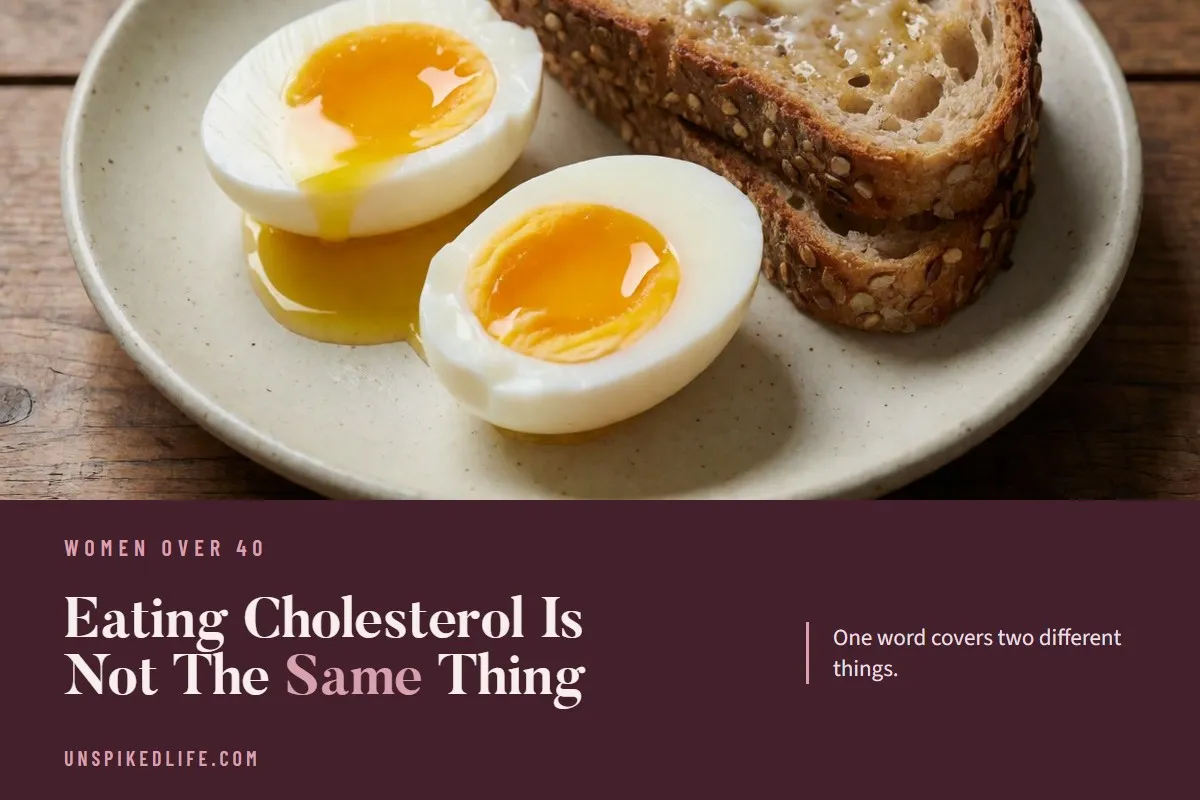
You stopped eating egg yolks somewhere around 1998.
Maybe it was the whole egg. Maybe it was butter, or red meat, or the fat you trimmed off everything before it went in the pan. Whatever it was, you did it because you were told to, by people who meant it, and you have kept doing it since.
Underneath that instruction was one word doing two jobs at once. The cholesterol in food and the cholesterol in your blood share a name, and they are not the same event.
That is not a licence to eat anything you like. It is a reason to look again at a habit you have never questioned.
1. Two different things, one word
The cholesterol in an egg is a substance in a food.
The cholesterol measured in your blood is something your body is making and moving around, mostly for its own reasons. Your liver makes the great bulk of it, every day, whether you eat any or not.
When you eat more, your liver tends to make less. When you eat less, it makes more. It is a system with a thermostat in it, not a bucket you are filling.
For most people, most of the time, the amount eaten moves the amount in the blood far less than the old advice assumed. That is why the guidance on eggs quietened down and then changed in most countries.
2. Your body is not storing it, it is using it
Here is the part almost nobody hears, and it is the interesting one.
Cholesterol is not waste. It is a building material, and one of the things it gets built into is hormones.
Oestrogen, progesterone and testosterone are all made on a cholesterol backbone. So is cortisol. So is vitamin D. It is also a structural part of every cell wall you own, and there is a great deal of it in your brain.
Read that again with a midlife eye. The material your body uses to build sex hormones is the thing you were told to fear. And you were told it during the stretch of life when that building is already becoming less reliable.
3. What the low-fat era actually did to breakfast
The instruction was to take the fat out. What happened in practice was that something else went in.
Take the fat out of yoghurt and it tastes of very little, so sugar goes in. Take the egg off the plate and the plate is toast and cereal, which is starch with almost nothing to slow it down. Take the fat out of a biscuit and starch and sugar do the work instead.
So a generation swapped a breakfast that held for a breakfast that did not, and then wondered why it was hungry at eleven.
Fat and protein together are why a boiled egg holds you. One egg is about six grams of protein and five grams of fat, and both of those slow how fast everything else in the meal digests.
4. What this does not mean
This is the part where a lot of writing on the internet goes wrong, so let me be plain.
This is not advice about your numbers. If a doctor has given you a reading and a plan, take it up with them. Nothing on a page like this one is a reason to change it.
This is not a case for eating anything you like. Saturated fat is a separate question from the cholesterol in food. People who study it still argue about it in good faith. Anyone who tells you it is settled, either way, is ahead of the evidence.
People differ. A minority of people do respond to dietary cholesterol quite strongly. If that is you, your doctor is the one who can tell.
What the last twenty years changed is narrower than the internet suggests. It is that the specific instruction to avoid cholesterol in food, on its own, was built on a simpler picture than the real one.
5. The fats that are worth having anyway
Whatever is true about the rest of it, some fats do a job that is not in dispute.
Olive oil, on the salad and on the vegetables. Olives themselves, which are mostly monounsaturated fat with no sugar at all. Rinse them if the salt matters to you, because the brine is the variable rather than the olive.
Oily fish. Salmon, sardines, mackerel. A small portion carries a lot, and tinned is a perfectly good way to get it.
Avocado. Nuts and seeds. Pistachios in the shell, if you tend to eat past the point you meant to. Cracking each one slows you down enough for the fullness signal to land.
None of that is exotic and none of it needs a supplement aisle.
6. The practical version at breakfast
If this changes one thing, it should be the first meal of the day.
An egg or two before the toast. Yoghurt that is plain rather than flavoured, with your own fruit in it. Something with fat and protein in front of the starch rather than instead of it.
Nothing leaves the plate. The toast is still there. It arrives second.
Then ask the one question that settles it for you rather than for a population. Forty-five minutes to an hour later, are you full and steady, or are you thinking about the kitchen again?
Your answer is the only one that has to apply to you.
7. The other thing that went out with the yolk
Worth a sentence, because it usually gets missed.
The yolk is where most of an egg’s nutrients live. Choline, which the brain uses. Vitamin D, in one of the few foods that carries any. Lutein. B vitamins. The white is protein and water and very little else.
So a habit of eating whites and binning yolks was throwing away most of the reason to eat an egg. And it was done to avoid a substance that turned out to matter less than the picture suggested.
That is not a scandal. It was reasonable advice built on the information available at the time, and the information changed. But a great many people never heard the second half.
8. Why this sits in a hormone article rather than a heart one
Because of where it lands for a woman in her forties.
You have spent twenty-five years avoiding a building material during the years your body needs it for the thing it is already struggling with. That is not a claim that eggs fix hormones. Nothing fixes hormones, and anyone selling that is selling something.
It is a smaller point, and a true one. A breakfast built from fat and protein holds you better than one built from starch. And the fat you were avoiding was never the problem it was made out to be.
That is worth knowing in a stretch of life where fewer things hold than used to.
Start with one breakfast
Do not overhaul the fridge. Put the egg back.
One breakfast, for one week. Egg or yoghurt or cottage cheese first, toast after, nothing else changed. Write down how you feel an hour later. Three words is enough.
Your body responds to the rate of change and not only its direction, so a single change tells you something a dozen changes cannot. Change one thing and there is only one thing it could have been.
And if you have a number from a doctor, take this page to them rather than instead of them.
This is general information about food and daily habits, not medical advice. Talk to your doctor before changing anything, especially if you take medication.
This is general education about food and daily habits, not medical advice. Talk to your own clinician before changing anything, particularly if you take prescribed medication.