Why The Middle Changes After Forty
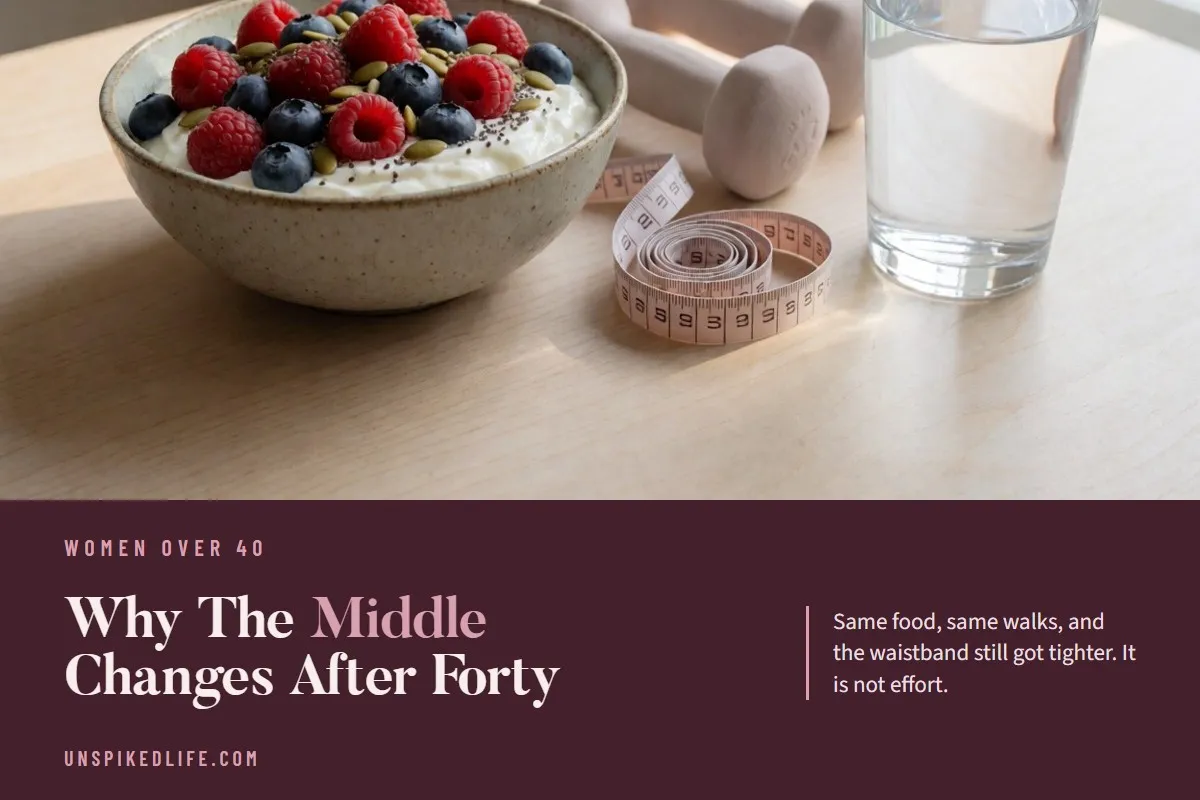
Nothing changed. That is what makes it so annoying.
Same breakfast. Same walks. You may even be eating less than you did at thirty-five. And yet the jeans that were fine last spring are tight at the waist, and only at the waist. Your arms and legs look about the same. It is the middle that moved.
You have probably done what most women do. Eat a bit less. Move a bit more. And it worked a lot less than it used to, which feels like your fault.
It is not. Something real changed underneath, and it helps to know what.
1. There are two kinds of fat in the middle
The fat you can pinch sits just under the skin. That is the one you notice in the mirror.
There is a second kind that sits deeper, around the organs inside the belly. You cannot pinch it. It is also the one that matters more for how your body handles food and energy.
As estrogen falls through the forties, the body starts to store more fat in that deeper spot. The same meals end up in a different place. That is why the waist changes when the rest of you does not.
So the goal is not just a smaller number on the scale. It is less of that deeper fat, and the steps that help with it are not the ones most people try first.
2. You are losing muscle without feeling it
From around forty, most people lose a little muscle every year unless they do something about it. You do not feel it happen.
Muscle matters here for a plain reason. It is where the body stores most of the sugar from a meal, and it is one of the biggest users of energy you have. Less muscle means less room to put sugar away, and more of what you eat has nowhere to go but storage.
This is why eating less often backfires at this age. Cut food hard and the body takes some of the loss from muscle. The scale goes down, and the thing that was helping you goes down with it.
3. Protein at every meal, not just dinner
The first fix is protein, spread across the day.
Most people eat very little protein at breakfast and lunch and most of it at dinner. Muscle can only use so much at one sitting, so a big steak at eight does less than you would hope.
Aim for around 30 grams at each meal. That is roughly two eggs and a pot of Greek yoghurt. Or a chicken breast. Or a tin of fish on toast.
Protein also keeps you full, because it digests slowly. That is half the reason it helps.
4. Lift something, alongside the walking
Walking is good. Keep doing it. But walking does not build much muscle, and muscle is what you are short of.
Muscle needs something to push against. That can be weights, resistance bands, or your own body weight. Getting up from a chair ten times without using your hands counts. So do wall push-ups.
Twice a week is a real start. Protein gives the body the materials. Lifting tells it to use them.
5. Fibre, and a lot more of it than you think
Most women eat about 10 grams of fibre a day. A good target is 25 to 35.
Fibre slows how fast a meal digests, which means a gentler rise and fewer cravings later. It also feeds the bacteria in your gut, and they have a say in how you store energy.
Beans, lentils, oats, chia, ground flaxseed, vegetables with the skins on. Add one at a time and give each one a week, or your stomach will tell you it was too much.
6. Sleep is part of it, not an extra
Short sleep raises cortisol, the stress hormone. Higher cortisol makes the body more likely to store fat in exactly that deep middle spot. It also makes you hungrier the next day, for exactly the foods that do not help.
Most women need seven to nine hours. In the perimenopause years, getting them is hard. Hot nights and three in the morning wake-ups are common. If sleep has fallen apart, that is worth taking to your doctor on its own. It is not a small thing.
7. Add before you take away
This is the most useful idea in this whole article.
Instead of cutting food, add what is missing. Most women trying to lose weight end up eating less of everything, protein and fibre included. They get hungry, tired and low on the very things that were helping.
So do it the other way round. Add protein to breakfast. Add a vegetable to lunch. Add beans to the soup. Often the less useful food gets crowded out without you trying to cut it.
8. Give the night a proper gap
Try to leave about twelve hours between the last food of the day and the first food of the next. Dinner done by eight, breakfast at eight.
That gap gives the body a stretch of time with no new food coming in. It can use what it stored instead of adding more on top.
Twelve hours is the start. There is no need to push it further to see a difference, and for many women longer gaps just make the evening hunger worse.
9. Measure with a tape, not the scale
The scale mixes everything together. You can lose fat and gain muscle in the same month and see no change at all. That is often exactly what is happening when you are doing the right things.
Get a soft tape measure. Once a month, measure your waist at the belly button, and your hips at the widest point. Write both down.
The waist is the number that tells you about that deeper fat. It often moves weeks before the scale does.
10. Why cutting harder makes it worse
When the waist will not move, the natural next step is to eat even less. It is worth knowing why that tends to go the wrong way.
The body notices when food drops sharply, and it adjusts. It spends a little less energy on everything and makes you hungrier. It also takes some of what it needs from muscle, which is the one tissue you were trying to keep. You end up running on less, with less to run on, and the evenings get harder rather than easier. So the harder you cut, the more of the old problem you build back in, and the more tired and cross you feel while doing it.
A small, steady change does not set off the same alarm. That is why one change at a time is not the soft option. It is the one that keeps working in month three, when the hard cut has usually stopped.
If you have cut hard before and it stopped working, that was not a lack of willpower. It was the body doing what bodies do.
Start with one
Do not do all ten things this week. That is how the plan ends by Thursday.
Pick one. A breakfast with real protein in it, every day, for a week. Or two short strength sessions. Or the tape measure, so you know where you are starting from.
Keep it for a week. Then add the next.
Nothing about your middle changed because you stopped trying. It changed because your body did. The fix is to work with the new body, not to punish the old one.
This is general information about food and daily habits, not medical advice. Talk to your doctor before changing anything, especially if you take medication.
This is general education about food and daily habits, not medical advice. Talk to your own clinician before changing anything, particularly if you take prescribed medication.