Why Grazing All Day Keeps You Hungry
Toast at seven. A banana at ten. Lunch at one. A handful of crackers at three, because you are flagging. Dinner. Something small in front of the television.
None of it is a lot. You have probably been told this is the healthy way to eat. Little and often. Six small meals. Keep your metabolism going.
So why are you hungry most of the day?
1. Where “little and often” came from
For a long time, the advice was to never let yourself get hungry. Eat every two or three hours, and your energy will stay steady.
It sounds sensible. But it was never well tested, and for many people it works the other way round. The body was not built to be fed all day. It was built to eat, then go a while without, and use what it stored in between.
2. What insulin does after every bite
Each time you eat, your blood sugar rises and your body releases insulin to move that sugar into your cells.
Here is the part most people do not know. Insulin takes a few hours to fall back down after a meal. It does not drop the moment your plate is empty.
So if you eat again at ten, then at one, then at three, insulin never gets the chance to come down. It stays up, from breakfast to bedtime.
That matters, because insulin is a storing hormone. While it is high, your body is in “put away” mode. It stores fuel. It does not burn what it already has.
3. The newspaper and the logs
Think about lighting a fire.
Sugar from food is like crumpled newspaper. It catches instantly and burns hot. But it burns out fast, so you have to keep throwing on more.
Your stored body fat is like a log. It burns slow and steady for hours. But it takes a while to catch, and it will not catch while you keep feeding the fire newspaper.
Grazing is feeding newspaper all day. You get quick bursts of energy, then a dip, then more newspaper. The logs never get lit. And because the paper burns out so fast, you keep feeling hungry.
Leave a gap between meals and the paper burns down. That is when the body turns to the logs. The energy that comes from them is steadier, and it does not leave you hunting for a snack.
4. Why cutting calories alone often stalls
This also explains something frustrating. You eat less, and nothing much happens.
If insulin stays high all day because you are grazing, your body finds it hard to take the missing energy from fat. So instead, it spends less, without telling you. You feel tired and cold and hungry, and the scale barely moves.
Same calories, spread differently, can land very differently. Three meals with gaps between them tend to work better than the same food nibbled all day.
5. It is not your willpower. It is the default
Fifty years ago, most people ate three meals and not much else. No snacks in meetings. No drinks in the car. No vending machine down the corridor. Not eating between meals took no effort, because there was nothing there.
Today food is everywhere. Pastries at the ten o’clock meeting. Biscuits at three. A birthday cake in the kitchen. A coffee shop on every corner. Saying no to all of it, all day, takes real willpower, and willpower runs out.
That is why grazing is so hard to stop. It is not a flaw in you. It is the room you are standing in. The fix is to change the room, not to try harder in it.
6. How to give your body a gap
You do not need to fast or skip meals. Start with the gaps you already have.
Three proper meals. Make each one big enough to last. Protein, vegetables, some fat, and a moderate amount of starch. A meal that holds you for four or five hours is what makes the gaps possible.
Put protein and vegetables first. They slow the whole meal down, so less insulin is needed and you stay full longer.
Eat at the table. Not at the desk, not in the car, not in front of a screen. Food eaten while doing something else barely registers, so you are hungry again sooner.
Keep meals to about an hour. A meal that stretches over an afternoon is really grazing with a plate.
Close the kitchen after dinner. A gap of about twelve hours overnight, dinner done by eight and breakfast at eight, is a good start and easier than it sounds.
7. Change the room
Some small changes make the gaps much easier.
Keep the snacks out of sight, or out of the house. Put a bottle of water on your desk instead of a bowl of sweets. Have a cup of tea or sparkling water ready for the three o’clock slump, when the biscuit usually wins.
If there are always pastries at the morning meeting, have a proper breakfast with eggs or yoghurt before you go. It is much easier to walk past food when you are not hungry.
8. What a meal that lasts looks like
The whole plan depends on meals that actually hold you, and most snacking starts with a meal that did not.
Here is the test. If you are hungry again within two hours of eating, the meal was too small, too light on protein, or too heavy on fast starch. Toast with jam at seven is a classic example: it feels like breakfast, and it is mostly newspaper.
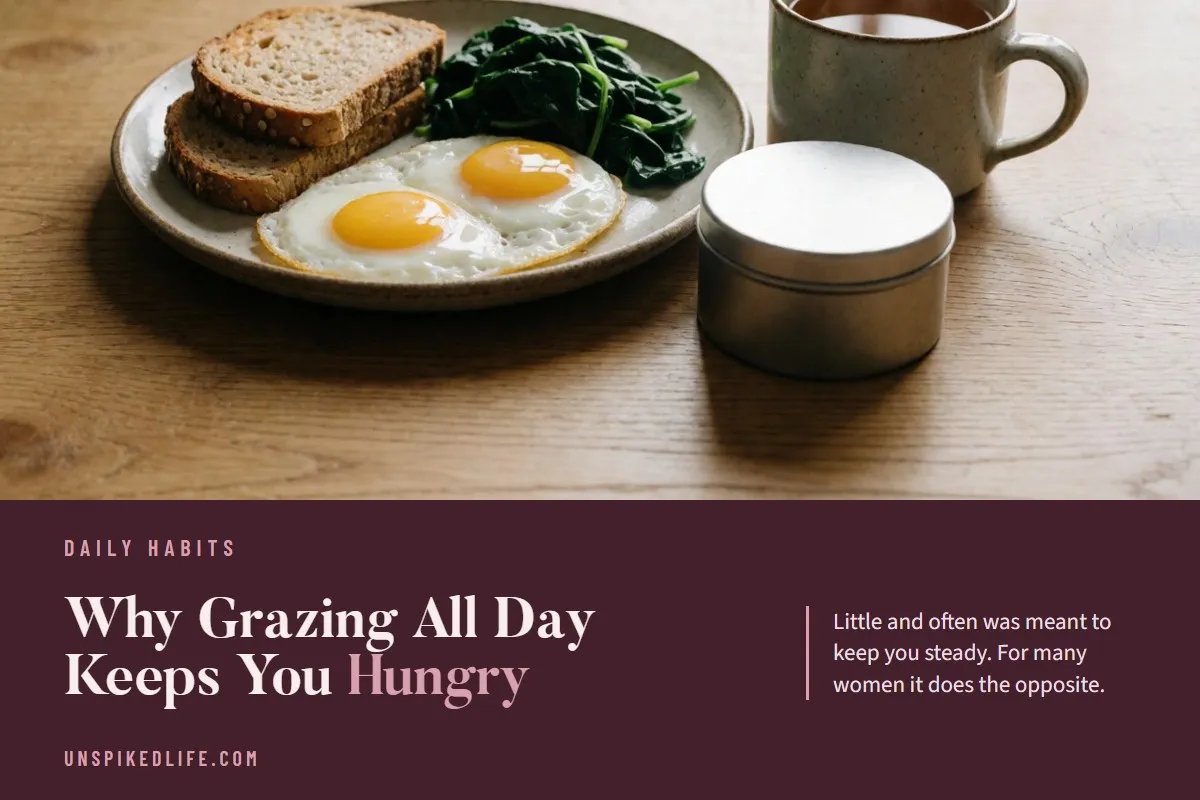
A breakfast that lasts looks more like two eggs on wholemeal toast with some spinach. Or a bowl of plain Greek yoghurt with berries and a spoon of seeds. A lunch that lasts has a palm-sized piece of protein and a pile of vegetables. Add a little olive oil, and make the bread or rice the smaller part of the plate. Soup with a tin of lentils in it counts. So does leftover chicken with a big salad.
When your meals look like that, going four or five hours without food stops feeling like effort. You simply are not thinking about food yet.
9. The first week
The first few days can feel strange. You may notice hunger at your usual snack times. That is mostly habit, and it passes quickly.
If you are properly hungry between meals, the meal before was probably too small or too light on protein. Make it bigger next time rather than adding a snack.
Most women find that within a week or two the between-meal hunger fades. Energy often feels steadier, too, without the rises and falls.
What about the evening?
For many women, the hardest gap is after dinner. The day is done, the television is on, and the cupboard is right there.
Two things help. First, make dinner satisfying enough that you are not still hungry at nine. Second, give the evening a different ritual: a cup of herbal tea, a bath, a walk round the block. The habit is often about the pause, not the food, so replacing the pause works better than just resisting the food.
Start with one
Pick the one snack you have most often. The ten o’clock one, the three o’clock one, or the one after dinner.
Drop just that one this week. Add a little more protein to the meal before it instead.
Keep everything else the same. After a week, notice whether you are less hungry at that time than you expected. Then pick the next one.
This is general information about food and daily habits, not medical advice. Talk to your doctor before changing anything, especially if you take medication.
This is general education about food and daily habits, not medical advice. Talk to your own clinician before changing anything, particularly if you take prescribed medication.