Ten Foods For A Stressful Week
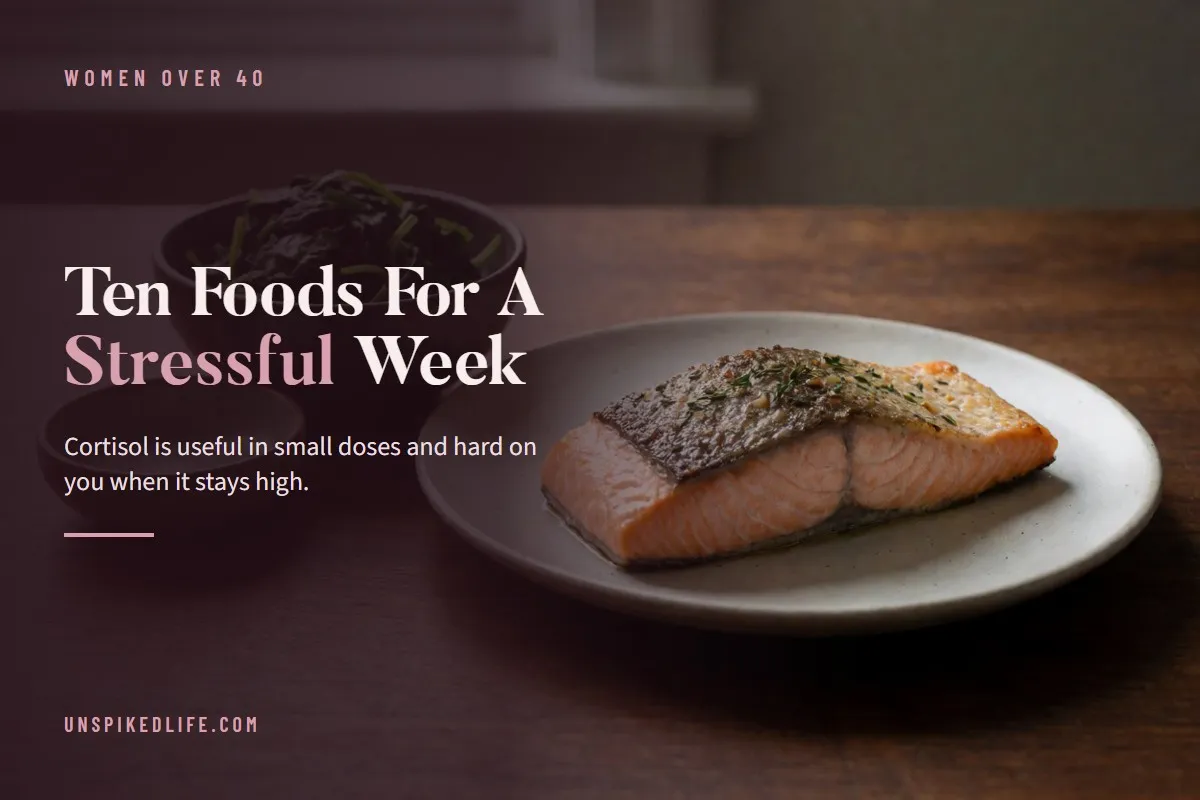
It has been one of those weeks. Work is loud, someone at home needs you, and there is a list in your head that does not stop at bedtime.
You are tired but wired. You want something sweet at four and something salty at nine. Sleep is thin.
Food will not fix the week. Nothing on a plate makes the inbox smaller. But what you eat can support how your body copes with it, or make the coping harder. This is the list of foods that help.
Why stress shows up in your eating
Cortisol is your main stress hormone. In small doses it is useful. It wakes you up in the morning and gives you energy for a hard moment.
The trouble is when it stays high for days. One of cortisol’s jobs is to make sure you have fuel, so it pushes blood sugar up. Higher blood sugar then falls, and that fall feels like hunger and fatigue. That is part of why a stressful week comes with cravings for sweet, fast food.
It also cuts into sleep, and poor sleep raises cortisol the next day. So the cycle feeds itself.
Food works on a few parts of that loop. It can keep blood sugar steadier, so the falls are smaller. And it can supply the nutrients your nervous system uses to settle.
1. Oily fish
Salmon, mackerel, sardines, trout. These carry omega-3 fats, which your brain and nervous system use. Omega-3s also help keep inflammation in check.
A tin of sardines on toast is a two-minute lunch and one of the cheapest ways to get them.
2. Leafy greens
Spinach, kale, chard. These are rich in magnesium, a mineral your nervous system relies on to calm down. Low magnesium is common, and it can make you more jumpy under stress.
Wilt a handful of spinach into eggs, soup or pasta sauce. It shrinks to almost nothing.
3. Nuts and seeds
Almonds, walnuts and pumpkin seeds carry magnesium too, along with zinc and B vitamins. They also bring protein, fat and fibre, which is the mix that keeps blood sugar steady.
A small handful at four is a far better answer to the afternoon than a biscuit.
4. Eggs
A complete protein, and a good source of choline, which your brain uses to make its chemical messengers. Protein at breakfast also slows the whole meal down, which means a smaller mid-morning dip.
On a hard week, two boiled eggs from the fridge is a breakfast that asks nothing of you.
5. Fermented food
Plain yoghurt with live cultures, kefir, sauerkraut, kimchi. These support the bacteria in your gut. Your gut and your brain are in constant contact, and the state of one affects the other.
This is an area where the research is still young. What is clear is that a varied, well-fed gut is a good thing, and a spoonful of sauerkraut is an easy way to add to it.
6. Berries
Blueberries, strawberries and raspberries are full of vitamin C and antioxidants. Stress uses up vitamin C faster than usual.
Eat them with yoghurt or a few nuts rather than on their own, so the sugar in them lands more gently.
7. Avocado
Healthy fat plus potassium. The fat slows down whatever else is on the plate, so avocado on toast is steadier than jam on toast.
Half an avocado is enough.
8. Dark chocolate
At 70 per cent cocoa or higher. It carries plant compounds called flavonoids, and it satisfies the sweet craving with much less sugar than milk chocolate.
Two squares, eaten slowly, after a meal. Not the bar.
9. Turmeric, with black pepper
Turmeric’s active compound supports the body’s handling of inflammation. On its own, very little of it gets absorbed. Black pepper makes a large difference to how much gets through.
So use them together. A lentil soup with turmeric, ginger and a good grind of pepper is warm, filling and slow to digest.
10. Green tea or matcha
Green tea contains L-theanine, an amino acid that supports a calm kind of alertness. You feel awake without feeling edgy. It also has less caffeine than coffee.
Swapping the second coffee of the day for a green tea is a small change that many people notice by the afternoon.
What a stressful day could look like
You do not need all ten. Here is a day with most of them in it, and nothing complicated.
Breakfast: two eggs with spinach, and a few berries. Lunch: sardines on wholemeal toast, with half an avocado. Four o’clock: a handful of almonds and a green tea. Dinner: lentil soup with turmeric and black pepper, and a spoon of plain yoghurt on top. After dinner, two squares of dark chocolate.
That is it. Every meal has protein in it. Every meal has something slow to digest. The sweet thing comes last, not at four.
The foods that make a hard week harder
The list above is what to add. It is worth knowing what tends to work against you, too, because stress pulls you straight towards it.
Sugar on its own, especially late. The biscuit at four, the ice cream at ten. Each one raises blood sugar fast, and the fall that follows can feel a lot like anxiety: a racing heart, a shaky edge, trouble settling. A late sweet snack is also one of the common reasons for waking at three in the morning.
A third or fourth coffee. Caffeine raises cortisol a little on its own. In the morning that is fine, and it is part of why coffee works. After two in the afternoon, it is borrowing from the night’s sleep.
Wine to wind down. It feels calming at eight. It tends to break up sleep in the second half of the night, which is when stress is already most likely to wake you.
Skipping meals because you are too busy. A long gap, then a big fast meal, is the pattern that gives you the biggest rise and the hardest fall. On a busy day, a boiled egg and a handful of nuts eaten at your desk does more than a proper lunch you never get to.
None of these are rules. They are just the places where a bad week and your blood sugar tend to make each other worse.
What food cannot do
It is worth being honest here. No food lowers stress on its own. If a week is heavy, the week is heavy.
What food can do is stop your blood sugar from adding to the load. The crash at four, the craving at nine, the 3am wake-up after a late sugary snack. Those make a hard week harder. Take those away, and you are left dealing with only the stress itself.
If stress has gone on for months, or you are not sleeping, that is worth talking to your doctor about. It is not something a shopping list should carry alone.
Start with one
Pick the moment in the day when stress hits your eating hardest. For most people it is four o’clock or after dinner.
Put one thing from this list in that spot. Almonds and a green tea at four. Two squares of dark chocolate after dinner instead of the biscuit tin.
Do it for a week. Notice whether the evening craving is any smaller. Then pick the next moment.
This is general information about food and daily habits, not medical advice. Talk to your doctor before changing anything, especially if you take medication.
This is general education about food and daily habits, not medical advice. Talk to your own clinician before changing anything, particularly if you take prescribed medication.